

A world of difference
Jas remembers being scared his mum's blood would run out.
She was a committed blood donor. Thankfully, we only take 470ml at a time so Jas had nothing to fear, and instead, his mum became a source of inspiration to him.
Now 36, Jas is an inspiration himself, having notched up more than 300 donations. He continues to donate both plasma and platelets to help people in need.
"My mum's health declined," Jas explains. "She could no longer give blood, but I knew I wanted to carry that on for her."
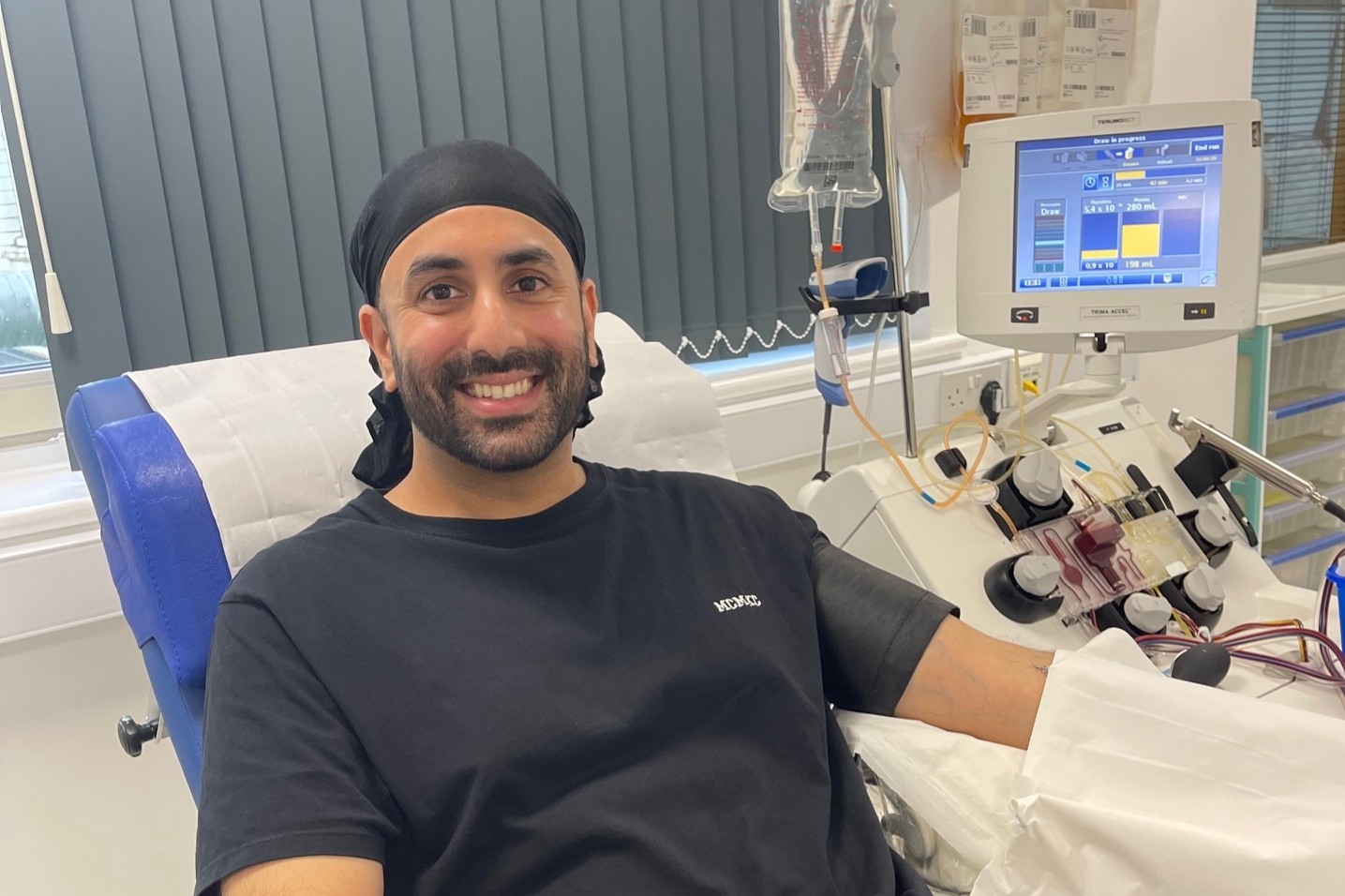 Jas started out at 17 as a blood donor, but later made the switch to plasma and platelets after learning he could help even more people. Nearly 70% of platelet donations are used to help people with cancer and plasma donations make lifesaving medicines that treat over 50 different diseases.
"My faith encourages helping people in any way possible," says Jas, a Sikh. "Donating whole blood, platelets, and plasma is such a simple yet powerful way to do that."
The Sikh faith teaches 'sewa'. It means helping others without expecting anything in return.
Plasma and platelet donation both take longer than giving blood, but can save more lives as donations can be made as often as every two weeks.
"Staff explained that platelets help cancer patients, people recovering from surgery, and even premature babies in intensive care," Jas says. "Once I understood the impact, I was 100% in."
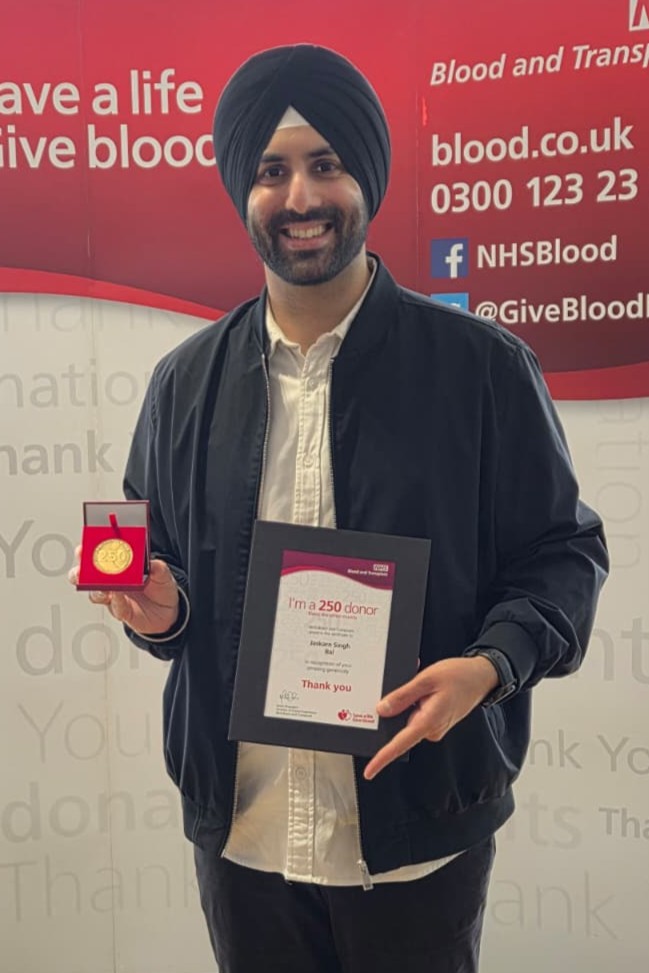 Now, each time he donates, Jas gives a double dose of platelets and a single dose of plasma.
"It's fulfilling knowing that what I'm doing means someone might get to see their loved ones again," he says. "I'd like to think that if a loved one ever needed blood or platelets, there'd be a match available because someone took the time to donate."
Jas also wants to encourage more people from Asian backgrounds to become donors. Patients who receive transfusions or stem cell transplants often need close matches with donors. These are typically with donors from the same ethnic background.
"Our blood types and genetic profiles can be vital matches for patients from similar communities," says Jas, "but I don't hear many people from my background talking about donating, and I'd love to help change that.
"I'm lucky that my workplace supports me in attending donations. It's such a meaningful use of time."
For Jas, the moment he receives the text telling him where his donation has gone never loses its magic. "It's an amazing feeling," he says.
"You realise you've directly helped someone, maybe even saved their life. It's such a small act, but it makes a world of difference."
Find out more about Donate Breaks – an NHS Blood and Transplant initiative that's encouraging employers to give their staff time to donate blood during working hours.
Every year, 17,000 people in England rely on the medicines made from plasma. Find out more about donating it here.
As well as people with cancer, platelets help those who've lost a lot of blood after an accident, organ transplant or surgery. Learn more about platelets here.