

Behind the scenes
Bristolian brothers George and Artie both have primary immunodeficiency.
The condition, which is genetic but rare, affects their immune systems, making it hard or even impossible for them to fight infections. George and Artie both receive regular immunoglobulin treatments, which are made from donated plasma, to treat it.
Plasma is used to create medicines like these that treat over 50 different diseases, including primary immunodeficiency. George and Artie are two of around 17,000 people who rely on NHS plasma medicines every year.
Last summer, 14-year-old George ran 5km every day for 25 days to raise awareness of blood donation and encourage people to sign up as blood or plasma donors. The feat is made all the more impressive by George's bronchiectasis - permanent lung damage, something he developed prior to his diagnosis with primary immunodeficiency.
 He has since spoken at multiple sixth forms about his condition, the lifesaving treatments he receives, and the vital role donors play in helping patients like him and his brother.
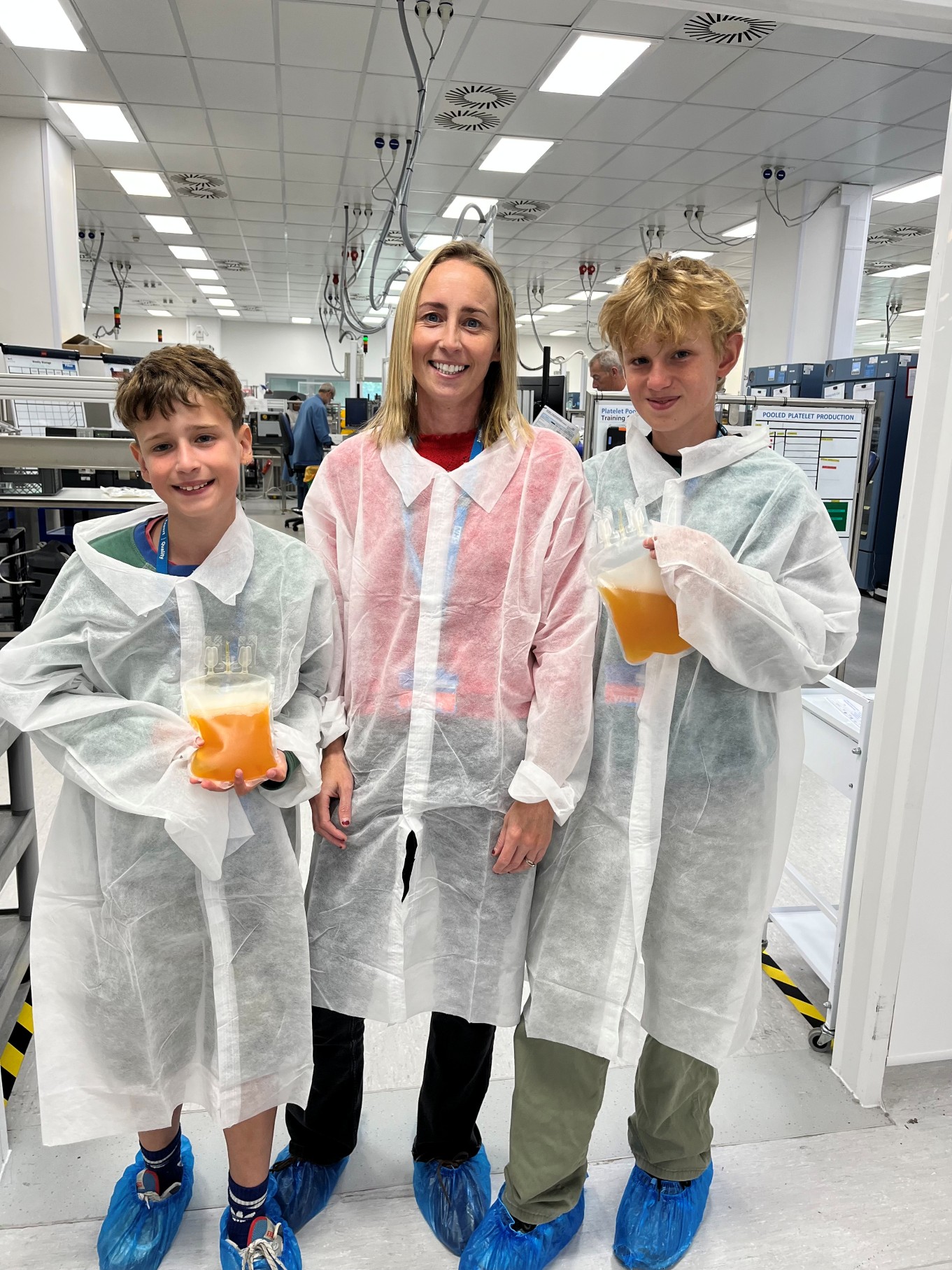
NHS Blood and Transplant invited George and Artie to see behind the scenes at the blood testing and processing facility in Filton, where donations from people across the country are turned into the lifesaving treatments on which they rely.
During the visit, George and Artie saw how donated blood is processed, how plasma is separated from whole blood donations, and how blood components are prepared before the plasma is sent to be manufactured into the vital plasma-derived medicines.
The plasma collected from thousands of donors is all combined together during the manufacturing process, meaning it takes many donations from different donors to help each patient.
"It was really interesting to see what happens after somebody donates blood and how it eventually becomes a treatment that helps people like me and Artie," says George. "I'm very grateful to everyone who donates.
"I want to help more people understand how important blood and plasma donation is because I know that my treatment wouldn't be possible without the generosity of blood and plasma donors."
His brother, Artie, was often fatigued before receiving immunoglobulin treatment. Lacking the energy to take part in sports and other activities, he missed out on things that many children his age take for granted.
Thanks to the plasma-derived medicines he receives, he now has more energy and is able to lead a much more active life, including playing rugby at his local club, taking part in sports at school and enjoying football with his friends.
"It was amazing to see all the different parts of the process and learn how donations help make the medicines that I need," he says.
"Thank you to all the people who donate blood and plasma."