

A negative blood type
Your blood type is determined by genes inherited from your parents.
Whether your blood type is rare, common or somewhere in between, your donations are vital in helping save and improve lives.
Is A negative blood rare?
1 in 13 donors is A negative
Around 8% of donors have A negative blood.
In comparison, 30% of donors have A positive blood.
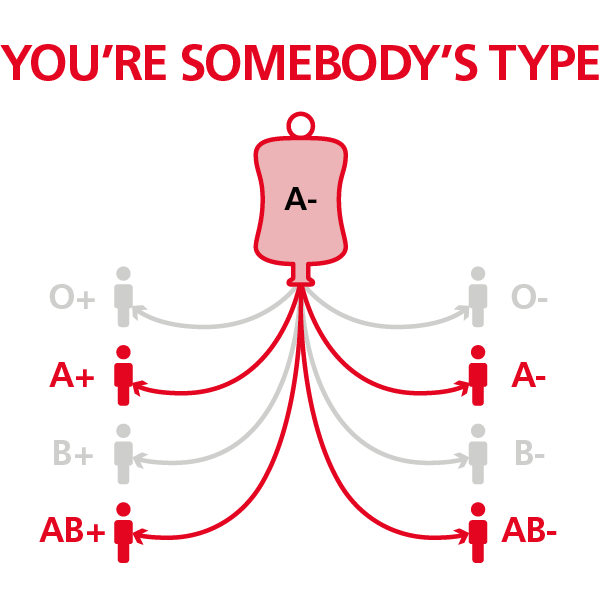
Who can receive A negative blood?
Group A and AB people
A negative red blood cells can be used to treat people with:
- A negative blood
- A positive blood
- AB positive blood
- AB negative blood
What blood can A negative people receive?
A negative and O negative
People with A negative blood can receive donations from:
- A negative donors
- O negative donors
Why is A negative blood important?
Anyone can receive A negative platelets
A negative red blood cells can be used to treat around 40% of the population.
A negative platelets are also particularly important because they can be given to people from all blood groups. That’s why A negative platelets are called the ‘universal platelet type’.
Platelets can help people with cancer and people who’ve lost a lot of blood after an accident, organ transplant or surgery.