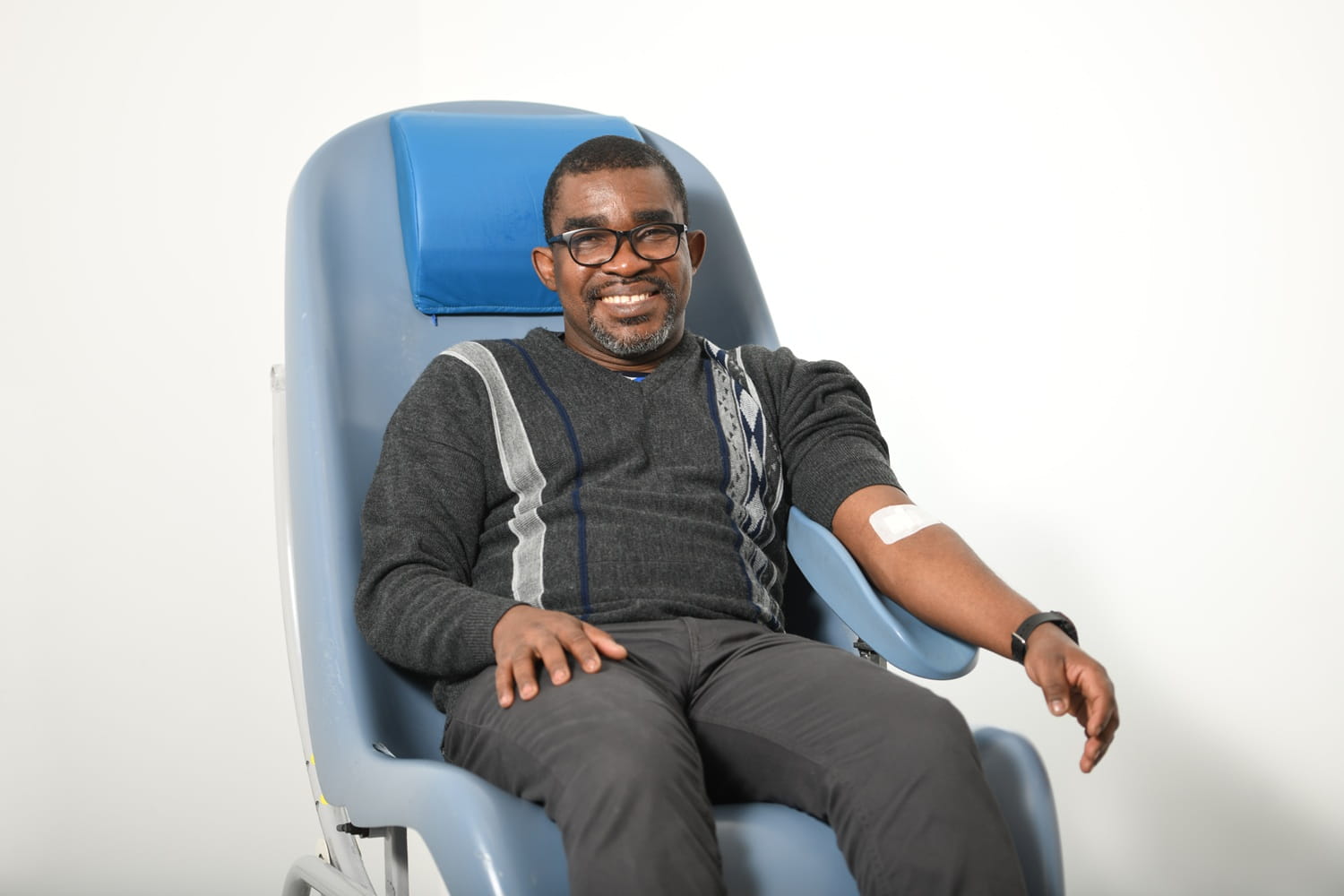
Sickle cell and blood transfusions
Some people with sickle cell need regular blood transfusions throughout their lives.
Donated blood can help manage symptoms and prevent serious complications. People receiving regular transfusions may need blood that is closely matched to their own.

What is sickle cell?
Sickle cell is a group of inherited blood disorders that affect red blood cells.
Healthy red blood cells are round and flexible, which helps them move through blood vessels. With sickle cell, some red blood cells become an unusual shape and can block blood vessels.
This can cause:
- episodes of severe pain
- anaemia
- an increased risk of stroke
- damage to organs
Anyone can have sickle cell, but it is more common in people from some ethnic backgrounds, including people of Black African and Black Caribbean heritage.
Ready to give blood?
It only takes a few minutes to sign up.
Sign up to donateCheck if you can give blood
Living with sickle cell
Sickle cell can affect many aspects of a person’s life. Some people need regular hospital treatment, including blood transfusions, to manage the condition.
In this video, Marsha talks about living with sickle cell, losing her sister Dominique to complications from the condition, and why blood donation is important.

How blood transfusions help people with sickle cell
Blood transfusions give healthy red blood cells from donors to people with sickle cell.
For some people, transfusions can help to:
- manage severe anaemia
- prevent strokes in some children and adults
- reduce the risk of other serious complications
What blood is needed for people with sickle cell?
Donated blood must be compatible with the person receiving it.
People who have regular transfusions may need blood matched for more characteristics than the main A, B, AB and O blood groups. A close match can reduce the risk of complications from repeated transfusions.
Blood type is inherited, so people from similar ethnic backgrounds are more likely to share certain blood characteristics.
Ro blood and sickle cell
Ro is one of the blood subtypes particularly needed for some people with sickle cell.
Ro is more common in people of Black heritage, but only a small proportion of current blood donors have it. This means there may not always be enough Ro blood available when patients need it.
People from all backgrounds can have Ro blood. You will not usually know whether you have it until you donate.
How you can help
People from all communities are needed to give blood. More donors of Black heritage are particularly needed to help provide closely matched blood for people with sickle cell.
We test every donation to identify its blood group and other important characteristics. Further testing can help us find donors whose blood is a close match for patients who need regular transfusions.
You will not usually know whether you have Ro or another particularly needed subtype until you donate.
New to donation?
It only takes a few minutes to sign up to help fight sickle cell.
Already a donor?
Book another appointment to help maintain the supply patients depend on.